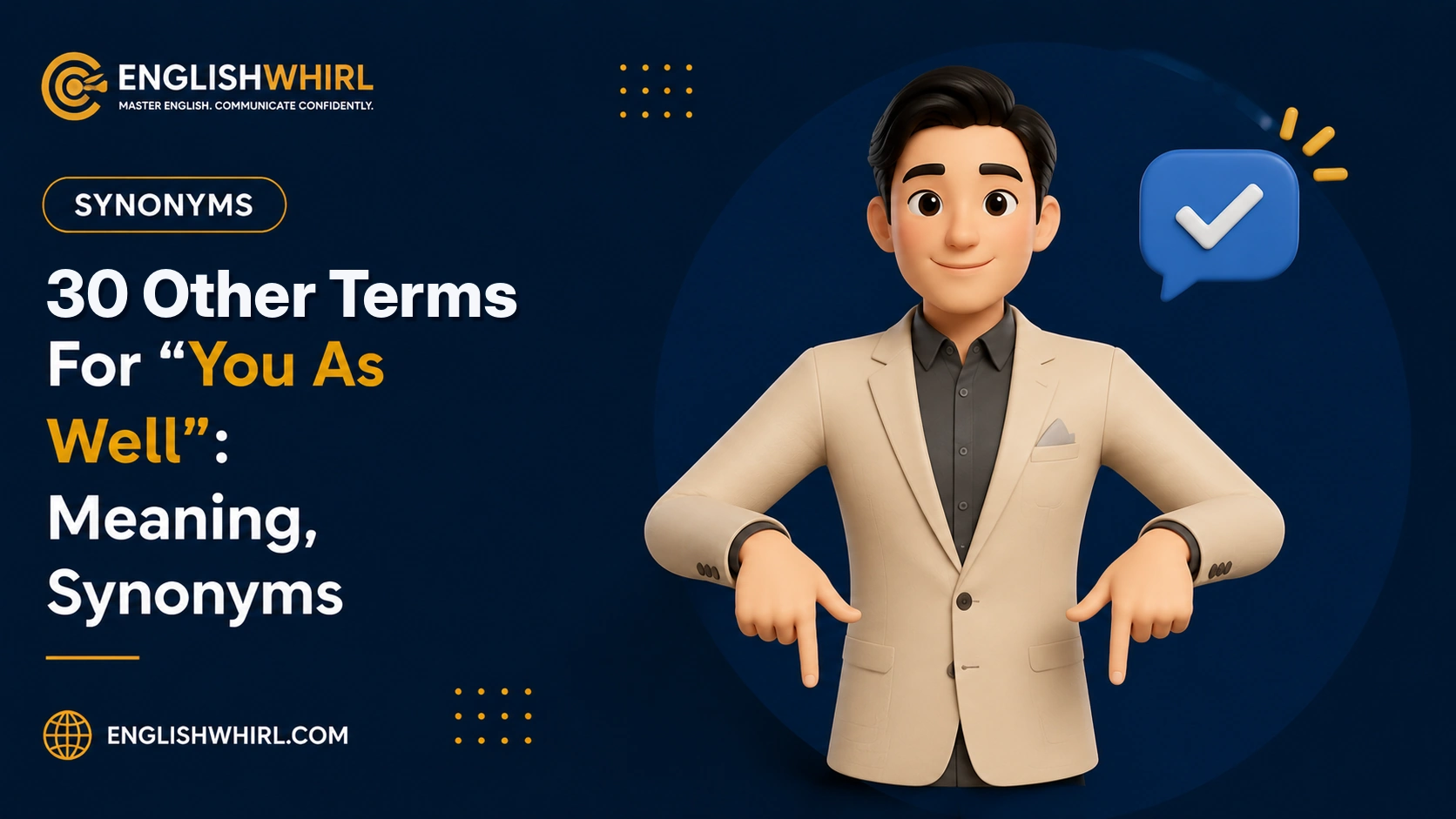
30 Other Terms to Say “You as Well”: Meaning, Synonyms & Examples
The phrase “you as well” is a common expression in English used to return a greeting, wish, compliment, or positive sentiment to another person. Whether someone says “Have a great day,” “Good luck,” “Happy holidays,” or “Take care,” responding with “you as well” helps express goodwill and mutual respect.
In this guide, you’ll learn the meaning of “you as well,” whether it is grammatically correct, when to use it, when to avoid it, and 30 useful alternatives that can improve your communication.
Some of the best alternatives to “you as well” include:
| Alternative | Tone | Best Use |
| Same to You | Friendly | Everyday conversations |
| Likewise | Professional | Workplace communication |
| The Same to You | Professional | Greetings and farewells |
| You Too | Casual | Everyday communication |
| Wishing You the Same | Warm | Personal communication |
| Right Back at You | Friendly | Informal conversations |
| And to You as Well | Professional | Business communication |
| I Wish the Same for You | Warm | Thoughtful responses |
| Thank You, Likewise | Professional | Workplace communication |
| The Feeling Is Mutual | Professional | Compliments and appreciation |
These alternatives allow you to respond politely while matching the tone of the conversation.
Is “You as Well” Grammatically Correct?
Yes, “you as well” is grammatically correct.
The phrase functions as a shortened response that means:
- The same to you.
- I wish the same for you.
- You too.
For example:
Person A:
“Have a wonderful weekend.”
Person B:
“You as well.”
The complete implied meaning is:
“I hope you have a wonderful weekend as well.”
Because English often omits repeated information in conversations, the shorter phrase sounds perfectly natural.
What Does “You as Well” Mean?
The phrase “you as well” means that you wish the same positive thing for another person that they just wished for you.
For example:
“Have a great day.”
“You as well.”
The phrase can be used to return:
- Greetings
- Compliments
- Good wishes
- Farewells
- Congratulations
- Encouragement
It communicates mutual goodwill and politeness.
Because of its flexibility, it is one of the most common conversational responses in English.
Origin & Modern Usage of “You as Well”
The expression developed naturally from longer English phrases such as:
- The same to you.
- I wish the same for you.
- And to you as well.
Over time, conversational English became more concise.
As a result, shorter responses such as:
- You too
- Likewise
- You as well
became increasingly common.
Today, the phrase appears frequently in:
- Everyday conversations
- Professional communication
- Customer service
- Retail interactions
- Business correspondence
- Telephone conversations
- Online messaging
Its popularity comes from its simplicity and versatility.
Why Do People Say “You as Well”?
People use this phrase because it acknowledges another person’s kindness and returns the positive sentiment.
For example:
If someone says:
“Have a safe trip.”
Responding with:
“You as well.”
shows appreciation and courtesy.
The phrase helps:
- Maintain politeness
- Build rapport
- Strengthen relationships
- Encourage positive interactions
- Show mutual respect
Because it is quick and easy to use, it has become a standard response in many situations.
Is “You as Well” Professional?
Yes, “you as well” is professional in most workplace situations.
For example:
Client:
“Have a great weekend.”
Response:
“Thank you. You as well.”
This sounds polite and appropriate.
However, in highly formal communication, alternatives such as:
- Likewise.
- The same to you.
- Thank you, likewise.
- Wishing you the same.
may sound slightly more polished.
The best choice depends on your audience and the level of formality required.
When Should You Use “You as Well”?
The phrase works best when responding to positive comments, wishes, or greetings.
Common situations include:
- Have a great day.
- Have a nice weekend.
- Good luck.
- Take care.
- Enjoy your vacation.
- Happy holidays.
- Safe travels.
- Have a wonderful evening.
Examples:
“Have a great day.”
“You as well.”
“Good luck with your presentation.”
“You as well.”
The phrase helps keep conversations friendly and respectful.
When Should You Avoid “You as Well”?
Although useful, the phrase is not appropriate in every situation.
For example, it may sound awkward if the original statement cannot logically apply to the other person.
Example:
“Congratulations on your promotion.”
Responding with:
“You as well.”
would not make sense unless the other person was also promoted.
In these cases, a more suitable response may be:
- Thank you.
- I appreciate it.
- That’s very kind of you.
Choosing contextually appropriate responses improves communication.
30 Other Ways to Say “You as Well”
1. Same to You
One of the most common alternatives that works in almost any situation.
Best Use: Everyday conversations
Tone: Friendly
Example: “Have a great weekend.” “Same to you.”
2. Likewise
A professional and concise alternative that is widely used in workplace communication.
Best Use: Business communication
Tone: Professional
Example: “It was nice meeting you.” “Likewise.”
3. The Same to You
A slightly more formal variation of “same to you.”
Best Use: Professional settings
Tone: Professional
Example: “Have a wonderful day.” “The same to you.”
4. You Too
A casual and extremely common response.
Best Use: Everyday communication
Tone: Friendly
Example: “Take care.” “You too.”
5. Wishing You the Same
A warm and thoughtful alternative.
Best Use: Personal communication
Tone: Warm
Example: “Have a successful week.” “Wishing you the same.”
6. Right Back at You
A playful and friendly expression that returns a compliment or good wish.
Best Use: Informal conversations
Tone: Friendly
Example: “Have an amazing day.” “Right back at you.”
7. And to You as Well
A polished alternative that sounds slightly more formal.
Best Use: Business communication
Tone: Professional
Example: “Best wishes for the holidays.” “And to you as well.”
8. I Wish the Same for You
A sincere and thoughtful response that emphasizes goodwill.
Best Use: Meaningful conversations
Tone: Warm
Example: “I hope everything goes well for you.” “I wish the same for you.”
9. You Too, Thank You
A polite combination that acknowledges the original sentiment.
Best Use: Customer service and workplace communication
Tone: Professional
Example: “Have a great day.” “You too, thank you.”
10. Many Thanks, and the Same to You
A courteous and somewhat formal alternative.
Best Use: Professional correspondence
Tone: Professional
Example: “Enjoy your weekend.” “Many thanks, and the same to you.”
11. Hope the Same for You
A friendly response that sounds genuine and personal.
Best Use: Everyday conversations
Tone: Warm
Example: “I hope you have a great trip.” “Hope the same for you.”
12. Sending the Same Your Way
A modern and friendly alternative often used in casual conversations.
Best Use: Personal communication
Tone: Warm
Example: “Wishing you lots of success.” “Sending the same your way.”
13. I Appreciate That, Likewise
A professional response that combines gratitude with reciprocity.
Best Use: Workplace communication
Tone: Professional
Example: “Have a productive week.” “I appreciate that, likewise.”
14. Back at You
A short and friendly expression that returns a positive sentiment.
Best Use: Informal communication
Tone: Friendly
Example: “Have a great day.” “Back at you.”
15. I Wish You the Same
A thoughtful and polished alternative suitable for both personal and professional situations.
Best Use: General communication
Tone: Warm
Example: “Wishing you happiness and success.” “I wish you the same.”
16. Thank You, Likewise
A polished and professional alternative that works well in both business and personal conversations.
Best Use: Workplace communication
Tone: Professional
Example: “Have a wonderful weekend.” “Thank you, likewise.”
17. The Feeling Is Mutual
This phrase is particularly useful when responding to compliments, appreciation, or kind sentiments.
Best Use: Professional and personal conversations
Tone: Professional
Example: “It’s always great working with you.” “The feeling is mutual.”
18. And the Same Goes for You
A conversational alternative that naturally returns a positive wish.
Best Use: Everyday communication
Tone: Friendly
Example: “Take care of yourself.” “And the same goes for you.”
19. Wishing You All the Same
A thoughtful expression that sounds warm and sincere.
Best Use: Personal communication
Tone: Warm
Example: “I wish you happiness and success.” “Wishing you all the same.”
20. Thank You, and You Too
A common response that combines gratitude with a returned wish.
Best Use: General communication
Tone: Friendly
Example: “Have a great evening.” “Thank you, and you too.”
21. My Best Wishes to You as Well
A refined and professional alternative often used in formal correspondence.
Best Use: Business communication
Tone: Professional
Example: “Best wishes on your new role.” “My best wishes to you as well.”
22. I Hope the Same for You
This phrase emphasizes sincerity and goodwill.
Best Use: Personal conversations
Tone: Warm
Example: “I hope everything goes well for you.” “I hope the same for you.”
23. The Same Applies to You
A professional and direct alternative suitable for workplace settings.
Best Use: Professional communication
Tone: Professional
Example: “Have a productive week.” “The same applies to you.”
24. Warm Wishes to You Too
A friendly expression that works particularly well during holidays and celebrations.
Best Use: Greetings and special occasions
Tone: Warm
Example: “Warm wishes for the holiday season.” “Warm wishes to you too.”
25. I Appreciate That, Thank You
A response that focuses on gratitude while acknowledging the other person’s kindness.
Best Use: Professional communication
Tone: Professional
Example: “I hope you have a great day.” “I appreciate that, thank you.”
26. May the Same Be True for You
A thoughtful and elegant alternative that sounds sincere.
Best Use: Formal communication
Tone: Professional
Example: “I wish you success in all your endeavors.” “May the same be true for you.”
27. And Many Happy Returns to You
A traditional response commonly used when discussing birthdays and celebrations.
Best Use: Special occasions
Tone: Friendly
Example: “Happy Birthday!” “And many happy returns to you.”
28. I Wish You All the Best as Well
A professional and polished expression that works in many situations.
Best Use: Business and personal communication
Tone: Professional
Example: “Best of luck with your new position.” “I wish you all the best as well.”
29. Here’s Wishing the Same for You
A warm alternative that sounds natural and conversational.
Best Use: Personal communication
Tone: Warm
Example: “I hope you have an amazing year ahead.” “Here’s wishing the same for you.”
30. The Very Same to You
A slightly formal expression that returns a greeting or good wish.
Best Use: Professional communication
Tone: Professional
Example: “Have a wonderful day.” “The very same to you.”
Comparison Table of the 10 Best Alternatives
| Alternative | Tone | Best Use |
| Likewise | Professional | Workplace communication |
| Same to You | Friendly | Everyday conversations |
| You Too | Casual | Informal communication |
| Thank You, Likewise | Professional | Business communication |
| The Feeling Is Mutual | Professional | Compliments and appreciation |
| And to You as Well | Professional | Formal greetings |
| I Wish You the Same | Warm | Personal communication |
| Warm Wishes to You Too | Warm | Holidays and celebrations |
| My Best Wishes to You as Well | Professional | Formal correspondence |
| I Wish You All the Best as Well | Professional | Business and personal communication |
You as Well vs You Too
These two phrases are very similar, but they differ slightly in tone.
You as Well sounds a little more polished and professional.
Example:
“Have a great day.”
“You as well.”
You Too is more casual and conversational.
Example:
“Take care.”
“You too.”
Both are grammatically correct and widely accepted in English.
Professional Alternatives to “You as Well”
Professional communication often benefits from polished language.
Strong alternatives include:
- Likewise
- Thank You, Likewise
- And to You as Well
- My Best Wishes to You as Well
- The Same Applies to You
These expressions sound courteous while maintaining professionalism.
Best Executive-Level Alternatives
For formal business communication, consider:
- Likewise
- The Feeling Is Mutual
- My Best Wishes to You as Well
- May the Same Be True for You
- I Wish You All the Best as Well
These options often sound more refined and thoughtful.
Email Alternatives to “You as Well”
Professional emails frequently end with positive wishes.
Examples include:
- Likewise.
- Thank you, likewise.
- My best wishes to you as well.
- I wish you all the best as well.
- Warm wishes to you too.
Email Example:
“Thank you for your assistance. Have a wonderful weekend.”
“Thank you, likewise.”
This response sounds professional and natural.
Workplace Alternatives to “You as Well”
Workplace conversations often benefit from courteous language.
Excellent alternatives include:
- Likewise
- Thank You, Likewise
- The Same Applies to You
- And to You as Well
- I Appreciate That, Likewise
These expressions help maintain positive professional relationships.
Common Mistakes When Using “You as Well”
One common mistake is using the phrase when the original statement does not logically apply to the other person.
For example:
“Congratulations on your promotion.”
Responding with:
“You as well.”
would usually sound incorrect.
Another issue is using overly casual alternatives in formal business settings.
For example, “back at you” may sound too informal when communicating with senior executives or clients.
Finally, avoid overusing the same response repeatedly. Variety helps conversations feel more natural.
Linguistic & Communication Insight
Why Reciprocal Language Matters
Expressions such as “you as well” help create balance in conversations by returning positive wishes and goodwill.
They reinforce politeness and strengthen social connections.
Formal vs Informal Responses
Formal options include:
- Likewise
- And to You as Well
- My Best Wishes to You as Well
- The Very Same to You
Informal options include:
- You Too
- Back at You
- Right Back at You
Choosing the right level of formality improves communication effectiveness.
Returning Positive Sentiments
The primary function of “you as well” is reciprocity. It acknowledges another person’s kindness while extending the same positive wish back to them.
Real-Life Examples
Workplace Communication
“Have a productive week.”
“Likewise.”
Client Communication
“Enjoy your vacation.”
“Thank you, likewise.”
Customer Service
“Have a great day.”
“You as well.”
Holiday Greeting
“Happy Holidays!”
“Warm wishes to you too.”
Personal Conversation
“Good luck with your interview.”
“I wish you the same.”
Frequently Asked Questions (FAQ’s)
Is “you as well” grammatically correct?
Yes. It is a grammatically correct and widely used expression in English.
What does “you as well” mean?
It means that you wish the same positive thing for another person that they just wished for you.
What is another way to say “you as well”?
Popular alternatives include:
- Likewise
- Same to You
- You Too
- Thank You, Likewise
- And to You as Well
What is the most professional alternative?
“Likewise” is often considered the most professional alternative.
Is “you too” the same as “you as well”?
Yes. Both phrases have essentially the same meaning, although “you too” is slightly more casual.
What should I say instead of “you as well” in an email?
Good options include:
- Likewise.
- Thank you, likewise.
- My best wishes to you as well.
When should I use “the feeling is mutual”?
Use it when responding to compliments, appreciation, or positive sentiments.
Can I use “you as well” at work?
Absolutely. It is commonly used in workplace communication.
What is the warmest alternative?
“I Wish You the Same” and “Warm Wishes to You Too” are among the warmest alternatives.
Why do people use reciprocal phrases?
They help express politeness, gratitude, and mutual goodwill while strengthening social and professional relationships.
Related Articles
The Bottom Line
The phrase “you as well” is a simple yet powerful expression that helps return greetings, compliments, and positive wishes. Because it is polite, versatile, and easy to use, it remains one of the most common responses in both personal and professional communication.
However, relying on the same phrase repeatedly can make conversations feel predictable. Alternatives such as likewise, same to you, thank you, likewise, the feeling is mutual, and I wish you all the best as well provide variety while maintaining the same positive meaning.