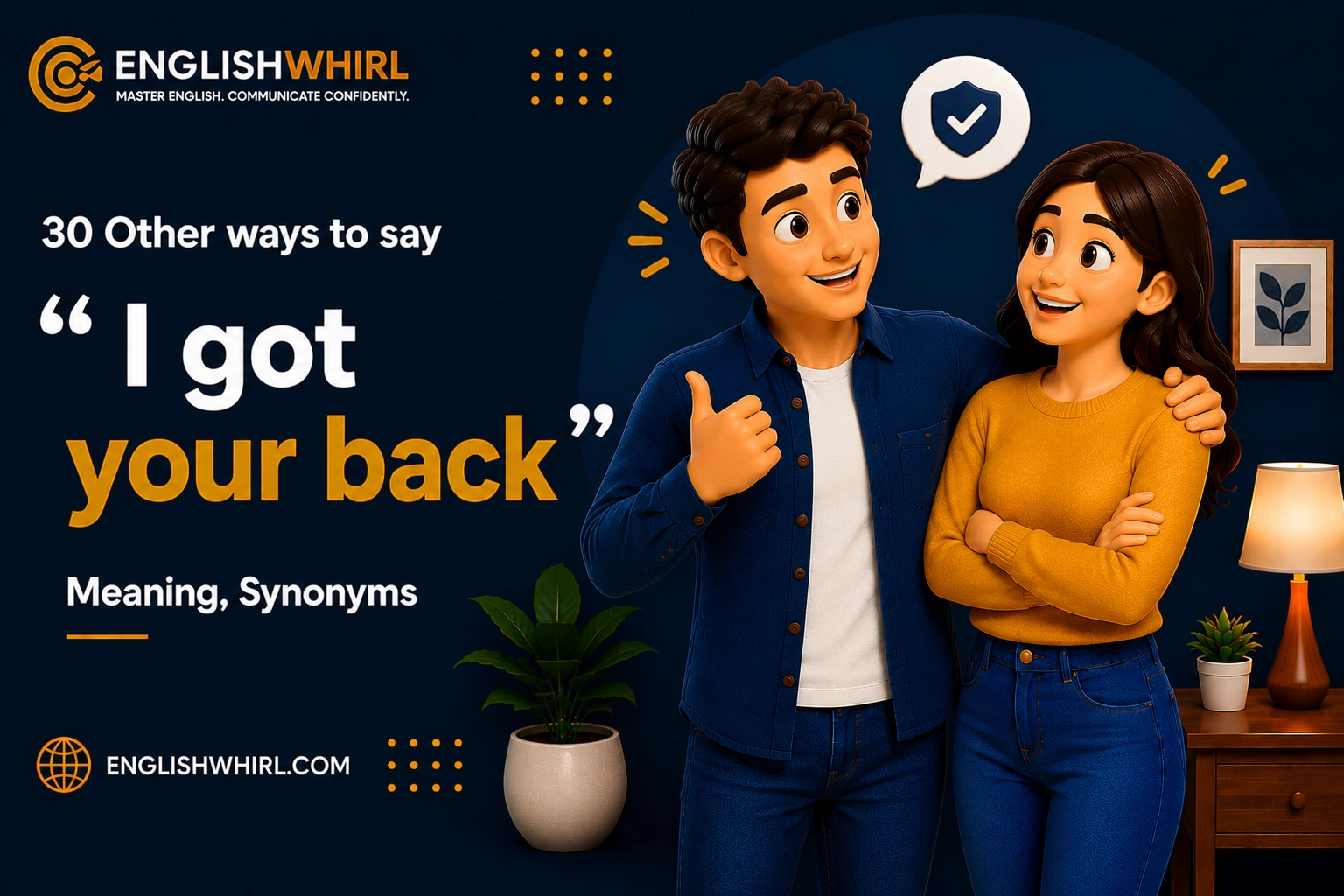
30 Other Ways to Say “I Got Your Back” (Meaning, Synonyms & Examples)
The phrase “I got your back” is one of the most popular idioms in everyday English. It expresses loyalty, trust, and a willingness to support someone during difficult situations. Whether you’re encouraging a friend, reassuring a colleague, or supporting a family member, this expression communicates that the other person can rely on you.
Although it’s widely used in casual conversations, there are many other ways to express the same idea. Some alternatives sound more professional, while others are warm, friendly, or even formal. Knowing these expressions helps you communicate more naturally in different situations.
In this guide, you’ll learn the meaning of “I got your back,” when to use it, whether it’s formal or informal, and discover 30 useful alternatives complete with meanings, examples, and practical usage tips.
What Does “I Got Your Back” Mean?
The idiom “I got your back” means “I will support you,” “I’ll protect you,” or “You can rely on me.” It reassures someone that they won’t face a challenge alone because you’ll help, defend, or stand by them.
The phrase originally comes from military language, where soldiers literally protected one another from attacks coming from behind. Today, it’s commonly used to express emotional support, loyalty, or teamwork.
Examples
- Don’t worry about the presentation. I got your back.
- Whatever happens, I’ve got your back.
- We always have each other’s backs at work.
In each example, the speaker promises support and reassurance.
When Should You Use “I Got Your Back”?
This expression works well in many everyday situations, including:
- Supporting a friend
- Encouraging a family member
- Teamwork at work
- Sports and competitions
- Difficult situations
- Personal relationships
- Motivational conversations
- Offering emotional support
Although it’s common in spoken English, it’s generally too informal for business emails or official documents.
Is “I Got Your Back” Formal or Informal?
“I got your back” is an informal idiom.
It’s perfect for:
- Friends
- Family
- Close colleagues
- Sports teams
- Casual conversations
For professional communication, alternatives such as “You can count on me,” “I’m here to support you,” or “You have my full support” are usually more appropriate.
Comparison Table of Popular Alternatives
| Alternative | Formality | Best Used In |
| You Can Count on Me | Neutral | Work and personal life |
| I’m Here for You | Neutral | Emotional support |
| You Have My Support | Formal | Business and workplace |
| I’ll Stand by You | Neutral | Friends and family |
| I’ll Be There for You | Neutral | Personal relationships |
| You Can Rely on Me | Formal | Professional settings |
| I’ll Help You Through It | Neutral | Difficult situations |
| I’m on Your Side | Informal | Everyday conversations |
| I’ll Support You | Formal | Workplace and personal life |
| We’ve Got This | Informal | Teamwork |
30 Other Ways to Say “I Got Your Back”
1. You Can Count on Me
Meaning
A dependable expression that promises help whenever someone needs it.
Example
- You can count on me if you need any assistance.
- No matter what happens, you can count on me.
Best used in: Business communication, friendships, and family conversations.
2. I’m Here for You
Meaning
A comforting phrase used to offer emotional support.
Example
- I’m here for you whenever you need someone to talk to.
- Remember, I’m always here for you.
Best used in: Personal relationships and emotional conversations.
3. You Have My Support
Meaning
A professional and respectful way to assure someone of your backing.
Example
- You have my full support on this project.
- Whatever decision you make, you have my support.
Best used in: Workplace communication, leadership, and professional emails.
4. I’ll Stand by You
Meaning
This phrase promises loyalty and commitment, especially during difficult times.
Example
- I’ll stand by you through every challenge.
- I’ll always stand by you.
Best used in: Personal relationships, friendships, and motivational conversations.
5. I’ll Be There for You
Meaning
A reassuring way to promise help and emotional support.
Example
- I’ll be there for you whenever you need me.
- No matter what happens, I’ll be there for you.
Best used in: Family, close friends, and supportive conversations.
6. You Can Rely on Me
Meaning
A trustworthy expression showing someone can depend on you.
Example
- You can rely on me to complete the project.
- You can always rely on me for honest advice.
Best used in: Professional and personal situations.
7. I’ll Help You Through It
Meaning
Used to reassure someone that you’ll assist them during a difficult experience.
Example
- Don’t worry. I’ll help you through it.
- We’ll get through this together—I’ll help you through it.
Best used in: Emotional support and challenging situations.
8. I’m on Your Side
Meaning
Shows that you support someone’s decisions or position.
Example
- I’m on your side, no matter what happens.
- Remember, I’m always on your side.
Best used in: Everyday conversations and friendships.
9. I’ll Support You
Meaning
A straightforward and versatile alternative that works in many situations.
Example
- I’ll support you throughout the project.
- I’ll support you in whatever decision you make.
Best used in: Workplace communication, education, and personal relationships.
10. We’ve Got This
Meaning
A motivational phrase that encourages teamwork and confidence.
Example
- Don’t worry—we’ve got this.
- Together, we’ve got this.
Best used in: Team projects, sports, and motivational conversations.
11. I’ll Always Be in Your Corner
Meaning
This idiom means you’ll continue supporting someone, especially during difficult times.
Example
- No matter what happens, I’ll always be in your corner.
- Remember that I’ll always be in your corner.
Best used in: Friendships, family, and motivational conversations.
12. I’ve Got You Covered
Meaning
This phrase reassures someone that you’ve handled everything or will take care of the situation.
Example
- Don’t worry about the report. I’ve got you covered.
- Need someone to watch your shift? I’ve got you covered.
Best used in: Workplace conversations, teamwork, and everyday situations.
13. I’m With You
Meaning
A simple expression showing agreement, encouragement, or emotional support.
Example
- Whatever you decide, I’m with you.
- I’m with you every step of the way.
Best used in: Personal relationships and teamwork.
14. You Won’t Face This Alone
Meaning
A reassuring phrase that tells someone they’ll have support throughout a challenge.
Example
- You won’t face this alone.
- We’ll get through it together—you won’t face this alone.
Best used in: Emotional support and difficult situations.
15. I’ll Be Right Behind You
Meaning
This phrase means you’ll support someone throughout a task or challenge.
Example
- Go ahead with your idea. I’ll be right behind you.
- I’ll be right behind you if you need any help.
Best used in: Teamwork and encouragement.
16. Lean on Me
Meaning
A warm expression inviting someone to depend on you.
Example
- Whenever life gets difficult, lean on me.
- You can always lean on me for support.
Best used in: Close friendships and family.
17. I’ll Stick by You
Meaning
Promises loyalty regardless of the circumstances.
Example
- I’ll stick by you through every challenge.
- True friends stick by each other.
Best used in: Personal relationships and friendships.
18. I’m Behind You
Meaning
Shows approval and support for someone’s decision or goal.
Example
- I’m behind you one hundred percent.
- The whole team is behind you.
Best used in: Workplace and personal encouragement.
19. I’ll Be Your Support System
Meaning
A heartfelt way to promise ongoing emotional or practical help.
Example
- I’ll be your support system while you adjust to your new job.
- Remember, I’ll always be your support system.
Best used in: Personal relationships.
20. You Have Someone to Depend On
Meaning
Reassures someone that they are not alone.
Example
- You have someone to depend on whenever you need help.
- Never forget that you have someone to depend on.
Best used in: Encouragement and emotional conversations.
21. I’ll Look Out for You
Meaning
Means you’ll protect or watch over someone.
Example
- Don’t worry. I’ll look out for you.
- We always look out for each other.
Best used in: Friends, family, and coworkers.
22. I’ll Watch Your Back
Meaning
A close synonym of “I’ve got your back” that emphasizes protection.
Example
- You watch mine, and I’ll watch your back.
- I’ll always watch your back at work.
Best used in: Teamwork, sports, and friendships.
23. You Can Depend on Me
Meaning
Shows reliability and trustworthiness.
Example
- You can depend on me to finish the project.
- You can depend on me whenever you need help.
Best used in: Professional and personal communication.
24. I’ll Stand With You
Meaning
Expresses solidarity and loyalty.
Example
- I’ll stand with you no matter what happens.
- Our entire team will stand with you.
Best used in: Professional, personal, and motivational situations.
25. I’ll Never Let You Down
Meaning
Promises reliability and commitment.
Example
- I’ll never let you down.
- Trust me—I won’t let you down.
Best used in: Friendships and personal relationships.
26. You’ve Got My Full Support
Meaning
A formal way to express complete backing.
Example
- You’ve got my full support on this proposal.
- You have my full support throughout this project.
Best used in: Business communication and leadership.
27. We’ll Get Through This Together
Meaning
Encourages teamwork while offering reassurance.
Example
- We’ll get through this together.
- No matter what happens, we’ll get through this together.
Best used in: Emotional support, workplaces, and families.
28. I Believe in You
Meaning
Shows confidence in someone’s abilities.
Example
- I believe in you—you can do this.
- I’ve always believed in you.
Best used in: Motivation, education, coaching, and friendships.
29. You’re Not Alone
Meaning
Reassures someone that they have support.
Example
- You’re not alone in this.
- Remember, you’re never alone.
Best used in: Emotional support and encouragement.
30. We’ll Face It Together
Meaning
Promises to handle a challenge as a team.
Example
- Whatever happens, we’ll face it together.
- We’ll face every obstacle together.
Best used in: Relationships, families, and workplace teamwork.
Comparison Table: Which Alternative Should You Choose?
| Situation | Recommended Alternative |
| Workplace | You Have My Support |
| Business email | You Can Rely on Me |
| Team project | We’ve Got This |
| Friend going through a tough time | I’m Here for You |
| Family support | Lean on Me |
| Sports team | I’ve Got You Covered |
| Motivational speech | I Believe in You |
| Difficult challenge | We’ll Get Through This Together |
| Leadership | You’ve Got My Full Support |
| Everyday conversation | You Can Count on Me |
Common Mistakes to Avoid
- Using “I’ve got your back” in very formal business emails.
- Confusing emotional support with physical protection.
- Overusing the same supportive phrase repeatedly.
- Using slang when speaking with clients or senior executives.
- Promising support that you cannot realistically provide.
Tips for Using These Alternatives Naturally
- Choose formal alternatives in professional settings.
- Use heartfelt expressions with close friends and family.
- Match your tone to the seriousness of the situation.
- Pair supportive phrases with encouraging actions.
- Personalize your message whenever possible.
Examples in Professional Communication
Instead of:
I’ve got your back.
You could write:
You have my full support throughout this project.
Instead of:
Don’t worry, I’ve got your back.
You could write:
You can rely on me if you need any assistance.
Instead of:
I’ve got your back on this.
You could write:
I’ll support you throughout the process.
Examples in Everyday Conversations
- You can count on me anytime.
- I’m here for you whenever you need me.
- We’ll get through this together.
- I’ve got you covered.
- You’re not alone.
Related Articles
If you found this guide helpful, you may also enjoy these EnglishWhirl articles:
- 30 Other Ways to Say “As You Know” (Meaning, Synonyms & Examples)
- 30 Other Ways to Say “Enjoyed Your Company” (Meaning, Synonyms & Examples)
- 30 Other Terms For “Happy to Assist”: Meaning, Synonyms & Examples
Frequently Asked Questions (FAQs)
Is “I’ve got your back” an idiom?
Yes. It’s a common English idiom that means you’ll support, protect, or stand by someone.
Is “I’ve got your back” formal?
No. It’s an informal expression that’s best suited for everyday conversations, friendships, and casual workplace discussions.
What is the most professional alternative to “I’ve got your back”?
Professional alternatives include “You have my full support,” “You can rely on me,” and “I’ll support you throughout the process.”
Can I use “I’ve got your back” at work?
Yes, if you’re speaking with colleagues in an informal environment. For emails or client communication, choose a more professional alternative.
What does “I’ve got your back” mean in a relationship?
It means you’ll remain loyal, supportive, and dependable, especially during challenging situations.
The Bottom Line
The phrase “I’ve got your back” is a powerful way to express loyalty, encouragement, and trust. Whether you’re supporting a friend, motivating a teammate, or reassuring a family member, it lets others know they can depend on you. By learning these 30 alternatives, you’ll be able to choose expressions that fit both casual conversations and professional communication, making your English more natural, versatile, and impactful.